
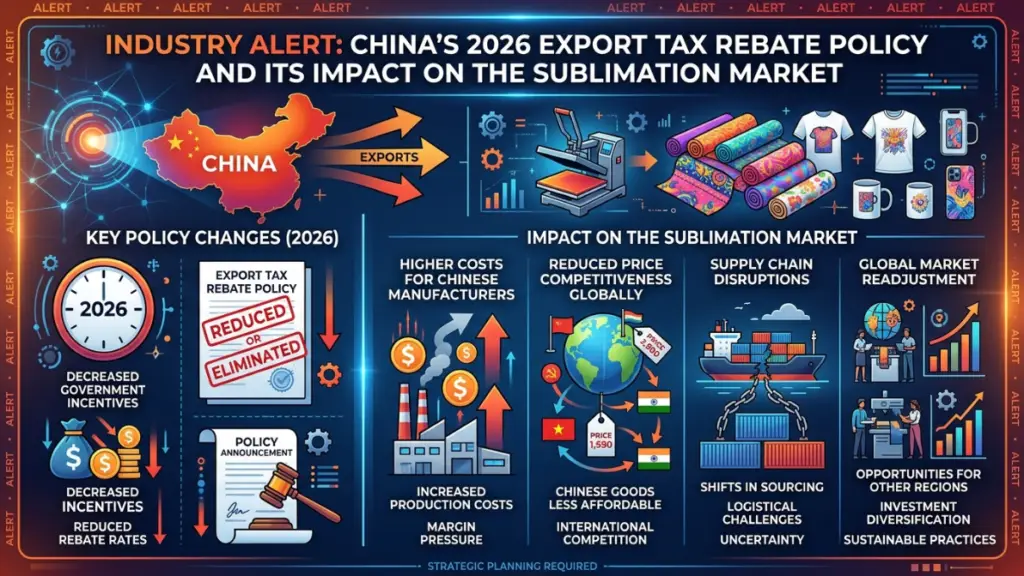
As of April 1, 2026, the Chinese government has officially implemented a significant adjustment to its export tax rebate policy. For the global sublimation industry, this marks one of the most substantial regulatory shifts in over a decade.
If you are a distributor, a POD (Print on Demand) business owner, or a bulk purchaser of sublimation blanks, it is crucial to understand how these changes affect your supply chain and pricing strategies.
1. What Exactly Has Changed?
The Chinese Ministry of Finance and the State Taxation Administration have announced the complete cancellation of VAT export rebates for a wide range of products. While the headlines often focus on solar panels and batteries, the policy deeply impacts the core materials of the sublimation industry:
Ceramics (HS 6911, 6912, 6913): This includes our popular ceramic plates, mugs, and jewelry trays.
Glass Products (HS 7013): Affecting sublimation glass photo frames, cutting boards, and ornaments.
Stone & Slate (HS 6803): Impacting the high-demand natural photo slate series.
Aluminum & Metal Blanks: Certain metal-based products have also seen rebate reductions or cancellations.
Historically, these products enjoyed a 9% to 13% tax rebate. With the rebate rate now dropping to 0%, the effective cost of exporting these goods from China has risen by approximately 9-10% overnight.
2. Why This Policy?
This shift is part of China’s broader economic strategy to move away from “low-cost, high-volume” exports toward high-quality, sustainable manufacturing. By removing subsidies from energy-intensive industries (like ceramics and glass production), the government is encouraging factories to innovate and focus on premium, high-value-add products rather than competing solely on price.
3. How This Affects the Sublimation Industry
A. Global Pricing Adjustments
Since the tax rebate was a significant part of the profit margin for most Chinese factories, the market will inevitably see a rise in the FOB (Free on Board) prices of sublimation blanks. You can expect a general price increase across the board for mugs, slates, and glass products in the coming months.
B. Industry Consolidation
Small, low-margin factories that relied heavily on tax rebates to stay profitable may struggle to survive. This will lead to an industry “clean-up,” where only established manufacturers with strong R&D, efficient production lines, and high-quality standards will remain competitive.
C. Focus on Quality Over Price
With the “price war” era coming to an end, the focus is shifting back to the quality of the sublimation coating. When the cost difference between a “cheap” blank and a “premium” blank narrows, smart buyers will prioritize coatings that offer better color reproduction and longer durability.
4. Leadsub’s Commitment: Navigating the Change Together
At Leadsub, with 20+ years of manufacturing expertise, we have been preparing for these shifts long before they were finalized. Here is how we are supporting our global partners:
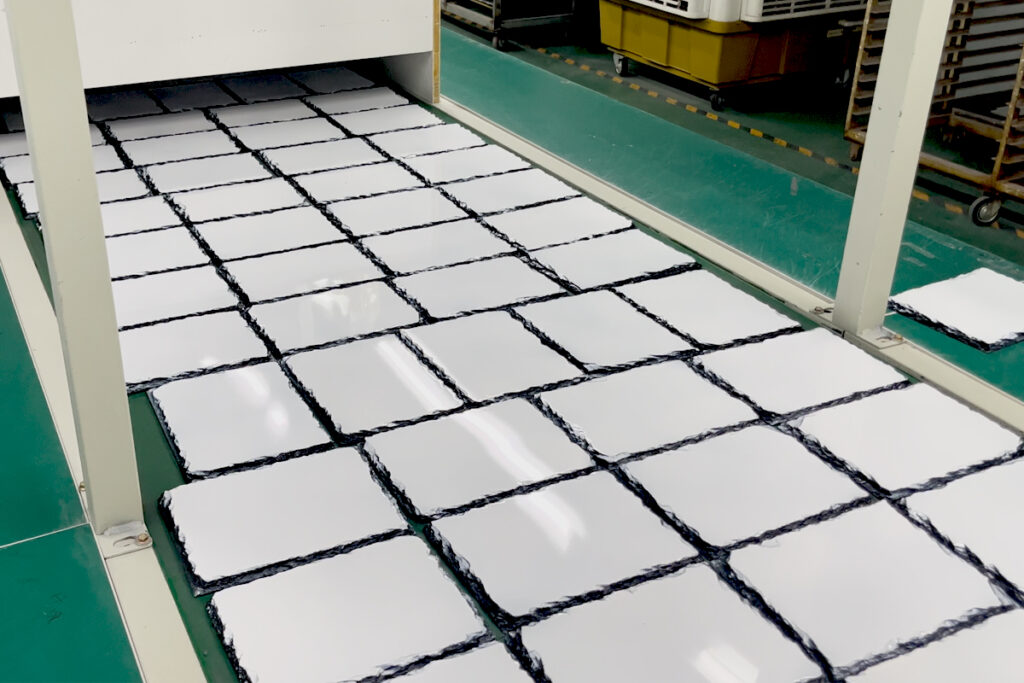
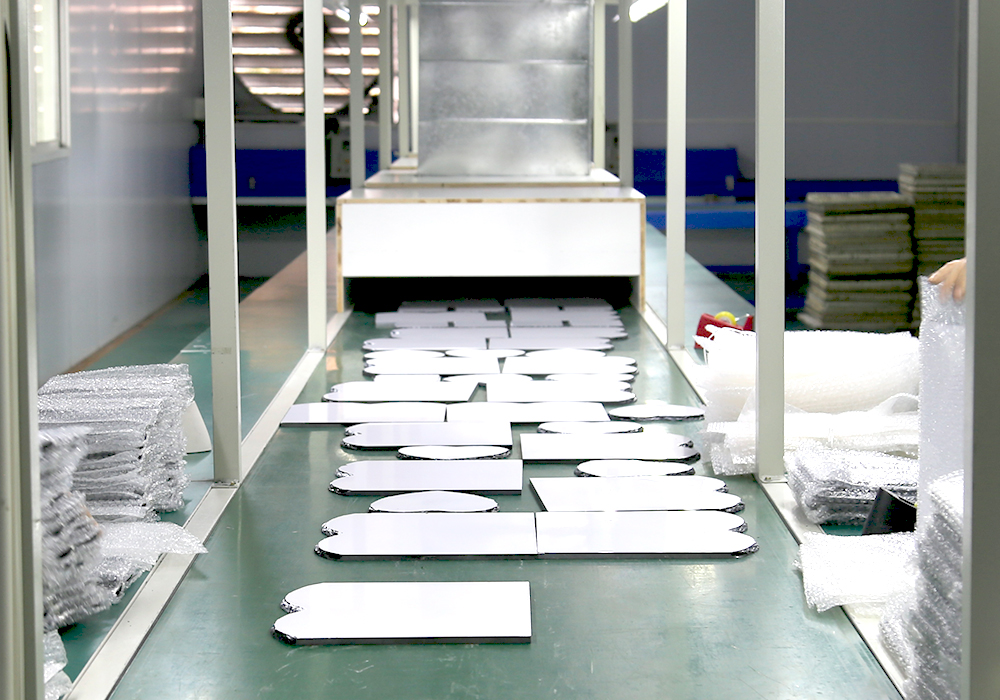
- Manufacturing Efficiency: We have upgraded our automated production lines to offset rising costs through improved efficiency.
- Uncompromising Quality: We continue to use premium coatings. In a market where prices are rising, ensuring your final product is flawless is more important than ever to maintain your brand reputation.
- Transparent Communication: We are committed to providing our clients with the most accurate and up-to-date market information to help you plan your procurement for the remainder of 2026.


Looking Forward
While the cancellation of export tax rebates presents a challenge, it also creates an opportunity for professional players to shine. The sublimation industry is evolving, and high-quality, personalized products remain in high demand globally.
If you have questions about how these policy changes affect your upcoming orders or if you would like to discuss long-term supply stability, our team is here to help, CONTACT US>>
